
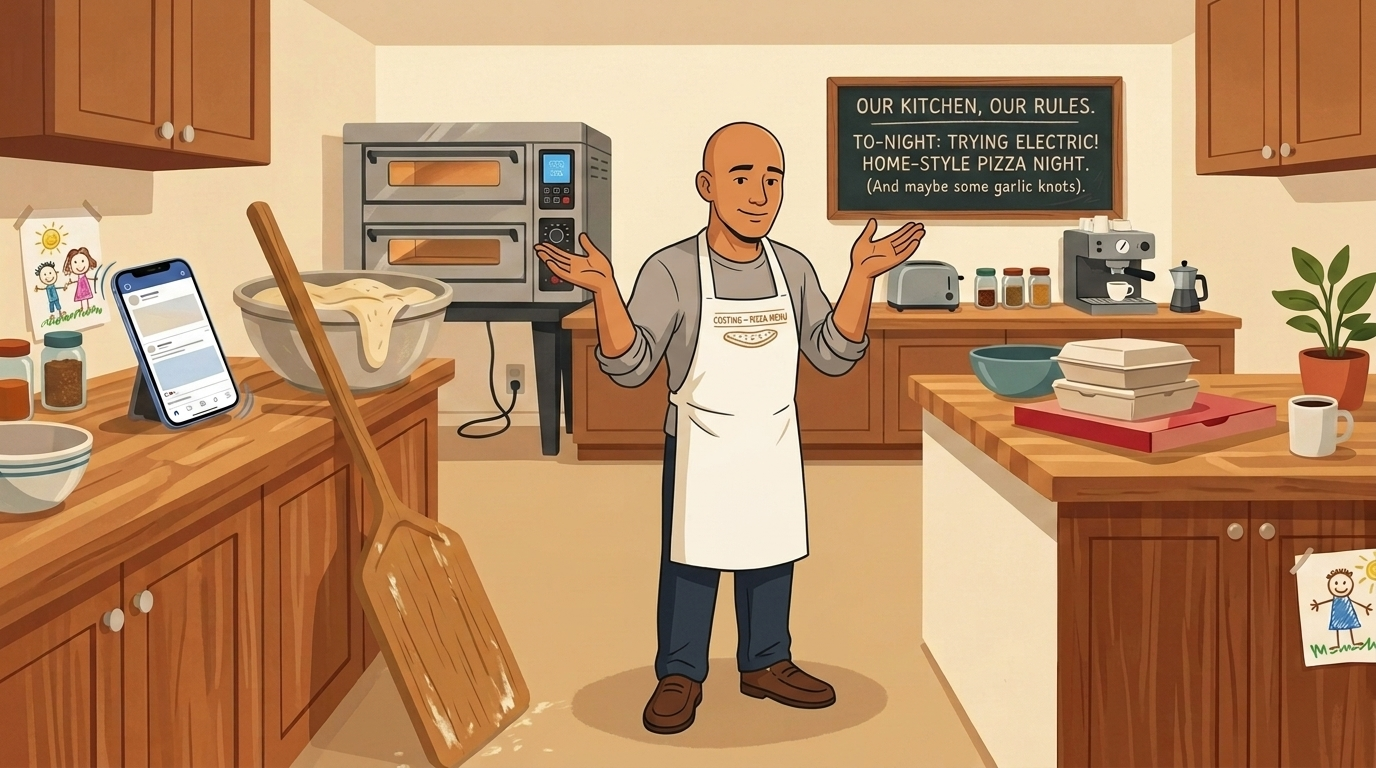
A home pizza business sounds like a brilliant idea. You make great pizza. You sell it locally. You earn solid extra income. You work on your terms.
And yes – that version absolutely exists. We’ve been living it for six years.
But the part people don’t see is this: most home pizza businesses don’t struggle because the pizza is hard. They struggle because the business creeps up on them. The pressure doesn’t arrive all at once – it builds quietly, in small gaps and small assumptions, until something that felt exciting starts to feel heavy.
If you understand where those pressure points are before you start, you can avoid most of them. Here are the five that matter most.
1.Inconsistency – the biggest home pizza business problem nobody sees coming”
At home, tiny variables change constantly. The room is warmer than last week. The dough proves faster. The oven takes longer to recover between pizzas. None of it feels dramatic in the moment. But over time those small variations accumulate – and customers notice, even if they can’t articulate why.
They don’t return because you once made an exceptional pizza. They return because they know it will be good every single time.
Consistency doesn’t come from talent. It comes from systems – measuring instead of guessing, repeating instead of improvising, keeping your process steady even when service gets busy. Boring systems build profitable businesses. It’s one of the less glamorous truths about this kind of work, but it’s probably the most important one.
2.Underpricing — and the pressure it creates
A lot of home pizza businesses start cautiously on price. Lower prices feel safer – more competitive, easier to justify when you’re not sure anyone will buy. But underpricing creates its own kind of pressure from the very first order. You need more customers just to make the evening worthwhile. Busy nights start to feel draining rather than rewarding. You find yourself chasing volume rather than building something sustainable.
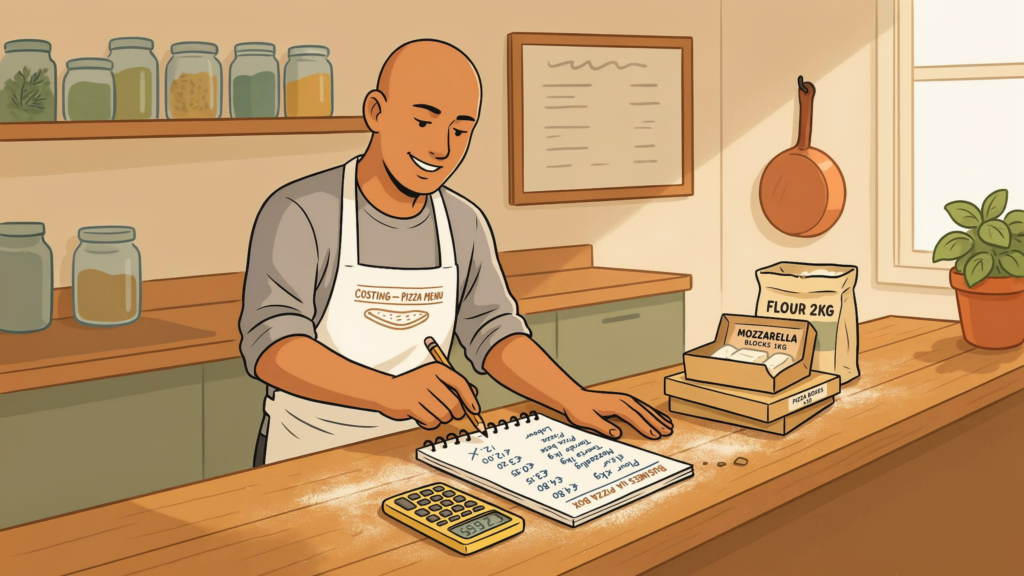
Price your product based on what it actually costs to make – ingredients, packaging, energy, your time. When your pricing reflects reality, the whole operation feels calmer. A business should feel worth the work.
3.When things go wrong – and they will
We had a Friday night early in CasaGees when the electricity went out mid-service. Not a dip, not a flicker – a full blackout. We had orders in, dough stretched, toppings ready, and suddenly no oven and no way to finish what we’d started.
We contacted every customer individually, explained what had happened, and refunded everyone. It was a painful evening. But it taught us something invaluable: every failure is a lesson, and some lessons need to be learned only once. We now have a backup generator. It has never been needed since – but it’s there.
The point isn’t that disasters happen, though they do. The point is that a proper system for what happens when things go wrong is just as important as the system for when things go right. One clear method for communicating with customers, a plan for refunds, and a clear idea of what you’ll do when the unexpected happens. Sort that before you need it – not halfway through a Friday night when things are already going wrong.
4.The myth of ‘it’s only two nights a week’
This one catches almost everyone at some point. You tell yourself you’re selling on Friday and Saturday – two nights, manageable. But those two nights rest on prep that happens earlier in the week, and without clear boundaries, the business has a way of quietly expanding to fill whatever space you give it.
The fix isn’t working harder – it’s working deliberately. Batch your prep. Keep your early menu tight rather than offering endless combinations. Simplicity creates speed, and speed creates control. You can always expand later; it’s much easier to do that from a calm foundation than from an exhausted one.
5.Trying to build it entirely alone
A home pizza business run by one person end-to-end has a ceiling, and it hits that ceiling faster than most people expect. Making pizzas while simultaneously managing orders, coordinating deliveries, and handling customer messages during service isn’t sustainable. Even a small amount of help – a second pair of hands on a service night, someone managing delivery – transforms how the whole evening feels.
This isn’t about building a team from day one. It’s about recognising early that longevity matters more than heroics.
None of the problems above are reasons not to start. They’re reasons to start thoughtfully – with a proper plan rather than a burst of enthusiasm and a bag of ’00 flour.
So is a home pizza business still worth it?
Absolutely – but it works best when you go in with a clear picture of what you’re building. The problems above aren’t reasons not to start. They’re reasons to start thoughtfully, with a proper plan rather than a burst of enthusiasm and a bag of ’00 flour.
Not sure if this is the right fit for you?
Take our free pizza quiz here and find out in just a few minutes. It’s designed to give you an honest picture of whether a home pizza business could work for your life. No pressure, no pitch.
