

If you’ve been Googling ‘how to start a pizza business’ at odd hours of the evening, you’re probably not alone. It’s one of those ideas that gets into your head and won’t leave – partly because it sounds brilliant, and partly because it’s hard to know where the dream ends and the practical reality begins.
So let’s talk about the practical reality. Specifically, the model we’ve built at CasaGees over the past six years – a home-based pizza delivery business operating from a domestic kitchen, two to three nights a week, that turns over between £4,000 and £6,000 a month at its best.
Not a restaurant. Not a food truck. Not a commercial kitchen. A home pizza business – and one that, with the right setup, is more achievable than most people think.
What ‘starting a pizza business from home’ actually means
You’re working from your own kitchen, selling to your local community, operating on evenings you choose, and building something that fits around your existing life rather than replacing it entirely. No tables to manage, no front-of-house staff, no commercial rent. Just good pizza, a reliable process, and customers who come back because they know what to expect.
It’s not passive income – there’s real work involved. But it’s contained, flexible, and for the right person, genuinely enjoyable.
Is it legal??
Yes – and this is the thing that surprised us most when we started CasaGees. We’d braced ourselves for red tape, complicated registration processes, forms we didn’t understand. What we actually found was a single registration form on our local council’s website. That was it. No fee, no approval process, no inspector on the doorstep before we could start trading. Registration is notification, not permission.
You’ll also need a food hygiene certificate – a one-day online course – and some basic record-keeping habits in place around allergens and ingredient sourcing. None of it is onerous. The only thing that creates problems is not doing it at all, which is both unnecessary and not worth the risk given how simple the process actually is.
What you actually need to get started
You don’t need a commercial kitchen. You need a domestic kitchen that’s clean, organised, and capable of handling consistent food preparation – enough fridge space for dough, a workspace you can move around quickly during service, and an oven you understand well enough to know its limitations.
On the equipment side, the basics are a pizza peel, a dough scraper, decent proofing containers, and a good set of prep bowls. The starting investment, using your own domestic oven, comes in at around £600. That’s the floor – and it’s enough to find out whether this works before you spend any more.
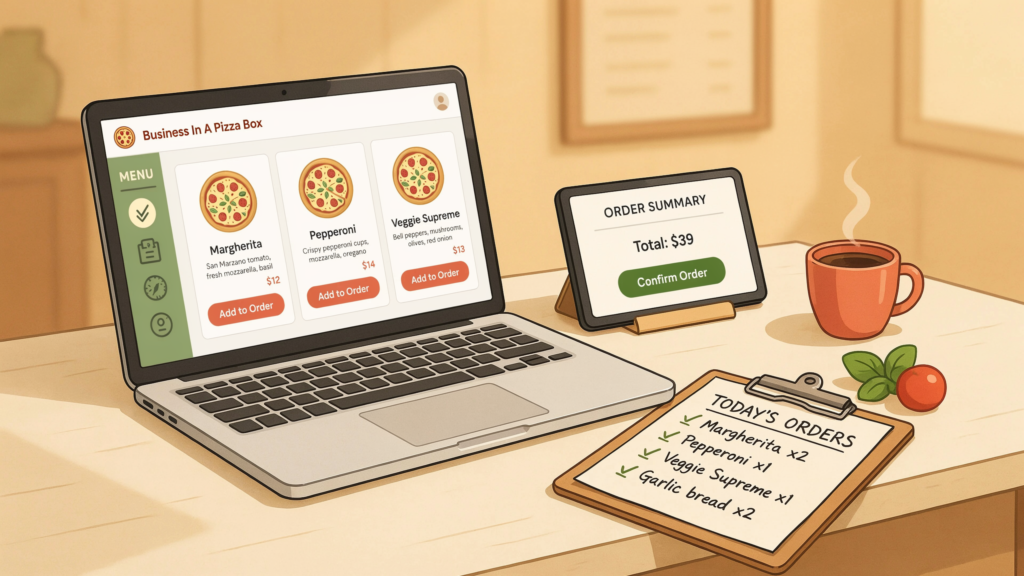
A simple ordering and delivery system
Before you take your first order, you need to know exactly how people will order, when the cut-off is, how you’ll manage the list during service, and how delivery will work.
Because we come from a software background, we built our ordering system before we took our first order. We knew from the start that it needed to be simple, in one place, and completely free of the WhatsApp-messages-and-crossed-wires chaos that sinks a lot of early home food businesses. However you set yours up, the principle is the same. Sort it before you need it, not halfway through a busy Friday when things are going wrong.
What a typical week actually looks like
Monday to Wednesday: the business barely exists. A bit of admin, maybe ordering supplies. Thursday evening: Elliott makes the dough – thirty minutes of active time, then it goes in the fridge overnight. Friday morning, before the working day starts, he balls the dough and gets it proofing. Friday afternoon: portioning toppings, setting up the workspace. Friday and Saturday evenings: service. Sunday: completely protected.
Total weekly commitment: somewhere between 15 and 25 hours depending on volume. Not nothing – but manageable alongside other work or family commitments. We run a software business alongside CasaGees and always have done.
The honest bit: what makes it work and what makes it hard
What makes it work: a consistent product, a simple ordering process, pricing that reflects your actual costs, and the discipline to keep your menu tight. What makes it hard: underpricing driven by nerves, taking on more orders than you can handle before you’ve got the process right, and not having a plan for finding customers beyond the first few weeks of excitement.
None of those problems are inevitable. They’re just worth knowing about before you start rather than after.
Starting a pizza business from home is genuinely achievable. But like any business worth having, it rewards the people who approach it thoughtfully.
Not sure if this is the right fit for you?
Take our free pizza quiz here and find out in just a few minutes. It’s designed to give you an honest picture of whether a home pizza business could work for your life. No pressure, no pitch.
